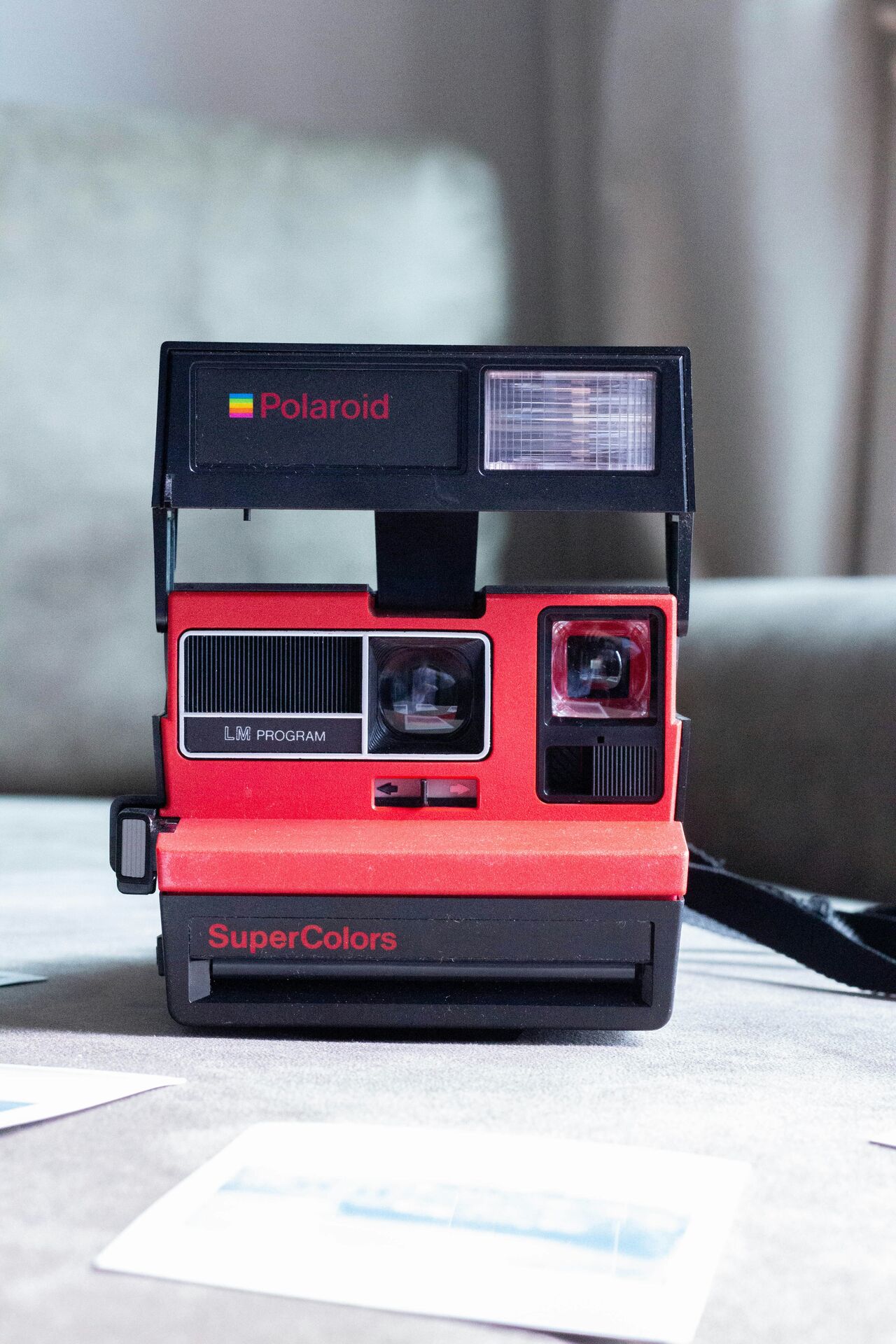
You found an old film camera at an estate sale for $18. At home you search eBay and the first listing you see is priced at $140. Your heart jumps. You list yours at $135 to undercut it, and then you wait. Six weeks later it's still sitting there.
The $140 camera hasn't sold either. It has been listed for a year.
"How much can I sell this for?" is the question behind every listing. Most new sellers answer it by looking at what other sellers are asking. That's a mistake. An asking price is a wish. This post shows how to price from what buyers paid, and how to know the lowest price you can accept.
One note before we start. Nobody can tell you what your item is worth, and no tool here will either. You're building an estimate from real sales, and you're the one who decides.
How much can I sell this for? Start with sold listings
eBay will show you past sales for free. There are two ways to see them.
The quick way. Search for your item on eBay. In the filters, turn on "Sold items." Each result is a real sale from about the last 90 days.
The deeper way. In Seller Hub, open the Research tab and use Product Research. It reaches back as far as three years and shows the average sold price, average shipping, how many sellers sold the item and a sell-through rate. It's free for sellers.
If a sold listing says "Best Offer accepted," the displayed listing price may not be what the buyer paid. Use Product Research to check the accepted price before counting it as a comparable sale.
eBay gives this data away for a reason. Items priced close to the market sell faster, and eBay earns its fee only when something sells. On this point your interest and eBay's line up, so use the tool.
Match your item before you trust a price
A sold listing only helps if it matches what you have. Check four things on each one.
- Same model or version. A small change in a model number can double or halve the price.
- Same condition. A tested, working camera and one sold "for parts" are different products.
- Same extras. A lens, a case, the box and the manual all move the price.
- Shipping. A $50 sale with free shipping and a $50 sale with $12 shipping are not the same sale. Add the shipping the buyer paid so you compare totals.
Be hard on yourself here. It's tempting to match your scratched item to the mint one that sold high. That is your hopes doing the matching. You know you've done it when every sold listing you kept is nicer than the item on your table.
Use the middle price, not the top one
Say you find six sold listings that truly match your camera. All had about $9 in shipping, and the item prices were:
$48, $52, $55, $58, $61 and $95
Add them up and you get $369. Divide by six and the average is $61.50.
Now look at the $95 sale. It's far above the rest. Maybe it had a rare lens you missed, or two buyers got into a bidding war. One odd sale pulled the average up by several dollars.
The median handles this better. Line the prices up in order and take the middle. With six prices, you take the two in the middle ($55 and $58) and split them. The median is $56.50.
For pricing, the median is the safer number. It tells you what a normal sale looks like. You can list a bit above it and accept offers, but do not plan your profit around the $95.
Find your floor before you list
The sold price tells you what the market will pay. Your floor tells you whether that's enough. The floor is the lowest price that still meets your goal after every cost.
For a US seller without a Store, eBay's fee in most categories is 13.6% of the total sale plus $0.40 per order over $10 ($0.30 at $10 or less). Category exceptions and extra charges can change that. The total includes the shipping and the sales tax the buyer pays. With a 7% tax rate (an example), the percentage fee comes to 14.552% of what you collect, plus the per-order fee.
These examples use sale-revenue margin: profit divided by item-plus-shipping receipts, excluding buyer tax. Upcyclist's app margin uses revenue after sales tax and platform fees instead.
Lowest amount to collect = (item cost + postage + supplies + $0.40) ÷ (1 − 0.14552 − margin goal)
This formula assumes the example's fee and tax rates and a positive denominator. A margin goal at or above 85.448% leaves no room for these costs, so it cannot produce a valid floor.
You paid $18. The label will cost $9 and the box and padding cost $1.50. The buyer pays $9 for shipping.
- Costs: $18 + $9 + $1.50 + $0.40 = $28.90
- Divide by: 1 − 0.14552 − 0.40 = 0.45448
- Lowest amount to collect: $28.90 ÷ 0.45448 ≈ $63.59
- Take off the $9 shipping the buyer pays: your floor price is $54.59
The median sold price was $56.50, which is above your floor. You list at $57.
Check the result at $57:
- Total sale for fee purposes: ($57 + $9) × 1.07 = $70.62
- eBay fee: 13.6% × $70.62 + $0.40 = $10.00
- Profit: $66 − $10.00 − $9 − $1.50 − $18 = $27.50
That is a 41.7% margin on the $66 you collected.
Now you have two numbers, and they do different jobs. The market estimate ($56.50) guides where you list; it is not a guaranteed sale price. The floor ($54.59) is where you stop saying yes.
Suppose a buyer sends an offer of $45. Without a floor, you'd go with your gut. With one, you can run it. At $45 your profit is $17.24 and your margin is about 32%. That misses your goal. You can counter at $55, or you can take it and know what you gave up.
If the floor is above your supported market estimate, the item may not hit your goal at a realistic sale price. Lower the goal for this one item, or accept that you paid too much. Do not list high and hope. Next time, check before you buy. Our free What Can I Pay? calculator takes the price you expect, your manual fee and cost assumptions, and your target ROI to show the most you can pay. It targets ROI, not the margin used in the floor formula above. Our guide on reseller profit margin vs ROI covers how to pick a goal that fits what you sell.
For worked fee examples, compare eBay vs Poshmark fees and note how shipping changes what you keep.
Check how fast it sells
Price is half the answer. Speed is the other half. A camera that sells for $57 in a week is a better buy than one that sells for $70 in eight months.
Here is a rough check you can do in two minutes. Count the sold listings for your item over the last 90 days. Then count the active listings right now.
- 24 sold and 30 active is strong. Buyers are clearing most of the supply.
- 6 sold and 90 active is weak. You'd be listing number 91.
When supply is that heavy, price at or just under the median if you want a sale this season. When sold listings outnumber active ones, you have room to price above the median and wait.
Product Research also reports a sell-through rate, so you don't have to count by hand. Read eBay's note on how it defines the number before you compare it with your own count.
FAQ
How much can I sell this for on eBay?
Look up sold listings that match your item's model, condition and extras. Take the median of the item price plus shipping. That is your best estimate of what a buyer will pay now.
How much should I sell this for if I want a fast sale?
Price at the median or a little under it, as long as that is still above your floor. If it is not, the item was bought too high for a quick flip.
Should I price high and take offers?
It can work if you know your floor. List a little above the median, turn on offers, and decline anything under the floor. Without a floor, offers slowly talk you down.
What if there are no sold listings?
Widen the date range in Product Research. If you still find nothing, look for the closest similar item and treat the price as a rough guess. Start higher, since you can lower a price later but can't raise it after a sale.
Is the reselling price the same on every site?
No. Buyers and fees differ by site. Our post on selling on multiple platforms shows how the same price pays out differently.
Upcyclist's Margin Goal (50% by default) gives you a suggested listing price of cost ÷ (1 − goal). For the $18 camera, that is $36. The suggestion doesn't count eBay's fee or shipping, so treat it as a starting point and check it against sold listings and a fee calculator. After you've recorded some sales, the Inventory Planner shows your own average selling price for an item and how many you've sold, which is a useful check on your memory.
What's next
Many sellers still add a PayPal fee to their eBay math, and many old calculators do too. Our next post covers eBay and PayPal fees, and what sellers pay now that the two are no longer tied together.